The Nissan GT-R R36 Is Coming – And Godzilla Is Going Hybrid
The Nissan GT-R has never followed trends – it has challenged them. From humiliating European supercars on a budget to redefining what all-wheel-drive performance could achieve, the GT-R earned its nickname “Godzilla” by breaking rules, not respecting them.
Now, with the GT-R R36, Nissan faces its biggest challenge yet: preserving the soul of an icon while adapting it for a new era defined by electrification, technology, and tightening regulations.
The R36 isn’t just the next GT-R. It represents a turning point – not only for Nissan, but for the idea of the modern performance car itself.
Design: Evolution, Not Reinvention
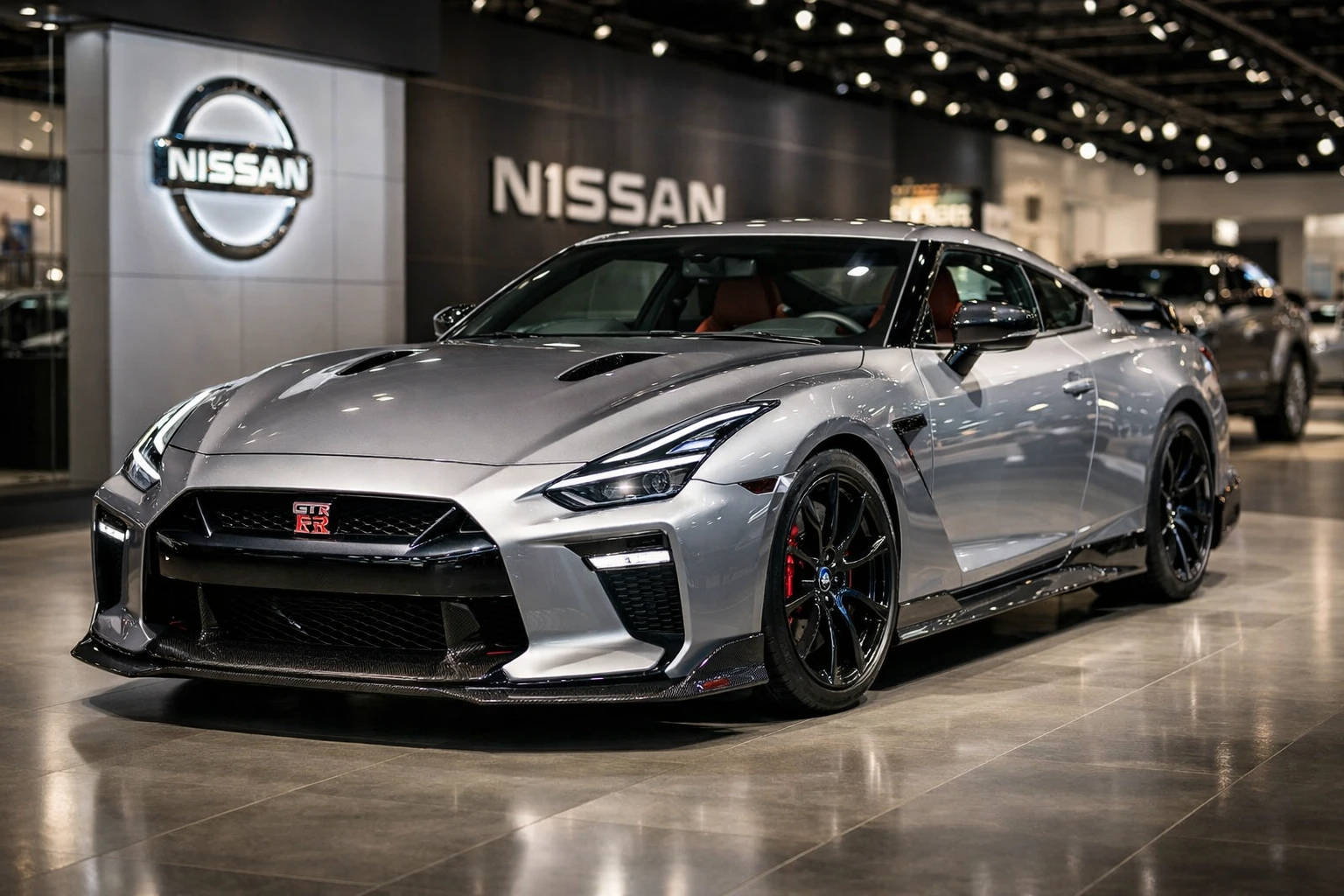
The GT-R R36 is expected to stay true to the unmistakable GT-R identity. Nissan understands that the GT-R’s shape is sacred – aggressive, functional, and instantly recognizable.
Rather than chasing radical supercar styling, the R36 will likely evolve the formula with sharper surfaces, cleaner aerodynamics, and a more futuristic presence.
Expected design highlights:
- Low, wide, and muscular proportions
- Sharper LED lighting with modernized GT-R signature elements
- Functional aerodynamic upgrades for cooling and stability
Sculpted bodywork emphasizing performance over decoration
The R36 won’t try to look exotic for the sake of it. Like every great GT-R before it, the design will be purpose-built, shaped by speed, airflow, and engineering necessity.
This is a car that should look intimidating – not elegant.
Interior: From Raw to Refined
One of the biggest criticisms of earlier GT-R generations was the interior. While performance was world-class, the cabin often lagged behind European rivals in terms of material quality and technology.
The R36 is expected to change that narrative completely.
Expected interior experience:
- Fully digital driver display with performance telemetry
- Modern infotainment with track and street modes
- Improved materials: leather, Alcantara, and carbon fiber
- Driver-focused layout inspired by motorsport
The R36 won’t abandon its performance roots, but it will finally feel worthy of its price tag inside. Think less “brutal machine” and more “high-tech weapon.”
It’s still a driver’s car – just no longer feels like it was built in another decade.
Also Read : mclaren-w1-the-next-chapter-in-mclarens-hypercar-legacy
Powertrain & Performance: Hybrid Godzilla Awakens
This is where the R36 becomes truly revolutionary.
The traditional twin-turbo V6 is expected to remain, but electrification will play a key role. Nissan is rumored to be developing a hybrid-assisted powertrain that enhances performance rather than replacing emotion.
Expected powertrain layout:
- Twin-turbo V6 internal combustion engine
- Hybrid electric motor(s) for torque fill and response
- Advanced all-wheel-drive system
- High-output battery designed for performance, not range
Estimated performance targets:
- Combined output: 700–800+ horsepower
- 0–100 km/h (0–62 mph): ~2.7 seconds
- Top speed: ~330 km/h (205 mph)
- Short electric-only driving capability for urban use
This isn’t a move toward silence or softness. The hybrid system exists to make the GT-R faster, sharper, and more relentless – not eco-friendly.
Godzilla may be electrified, but it will still breathe fire.
Driving Experience: Brutal Precision, Now Smarter
The GT-R has always been known for one thing: devastating real-world speed. It didn’t need drama — it delivered results.
The R36 is expected to build on that legacy with more intelligence baked into the experience.
Expected driving characteristics:
- Instant torque delivery from hybrid assistance
- Enhanced traction and corner exit speed
- Improved chassis balance and suspension tuning
- Driving modes ranging from daily comfort to track aggression
The goal isn’t to tame the GT-R – it’s to refine its brutality.
The R36 should feel faster, more controllable, and more confidence-inspiring than ever, without losing the sense that it’s a machine barely held in check.
Technology & Innovation
The GT-R R36 will likely serve as Nissan’s technological flagship, showcasing advancements developed across motorsport, electrification, and performance engineering.
Key innovations expected:
- Hybrid performance energy management
- Advanced torque vectoring all-wheel drive
- Adaptive suspension and active aerodynamics
- Lightweight materials to offset hybrid weight
Unlike some modern performance cars, the GT-R won’t drown the driver in gimmicks. Technology will exist for one purpose only: to go faster.
Positioning: Supercar Killer, Again
Historically, the GT-R has thrived by punching above its weight.
The R36 is expected to target cars far more expensive – Porsche 911 Turbo S, McLaren Artura, Ferrari Roma – while undercutting them on price and outperforming them in raw acceleration and grip.
It won’t be the most luxurious.
It won’t be the rarest.
But it may once again be the most devastatingly effective.
Pros & Cons
✅ Pros
- Hybrid performance without sacrificing GT-R character
- Brutal acceleration and real-world usability
- Advanced AWD system
- Iconic design evolved for the future
❌ Cons
- Heavier due to hybrid components
- Purists may resist electrification
- Less emotional sound compared to older GT-Rs
Who Is the Nissan GT-R R36 For?
The R36 is built for:
- Drivers who value performance over prestige
- Enthusiasts who want supercar speed without supercar drama
- Long-time GT-R fans ready to embrace evolution
Buyers who want one car that does everything brutally well
Final Thought
The Nissan GT-R R36 doesn’t exist to chase trends or impress critics. It exists to continue a legacy — one built on defiance, engineering dominance, and raw performance.